
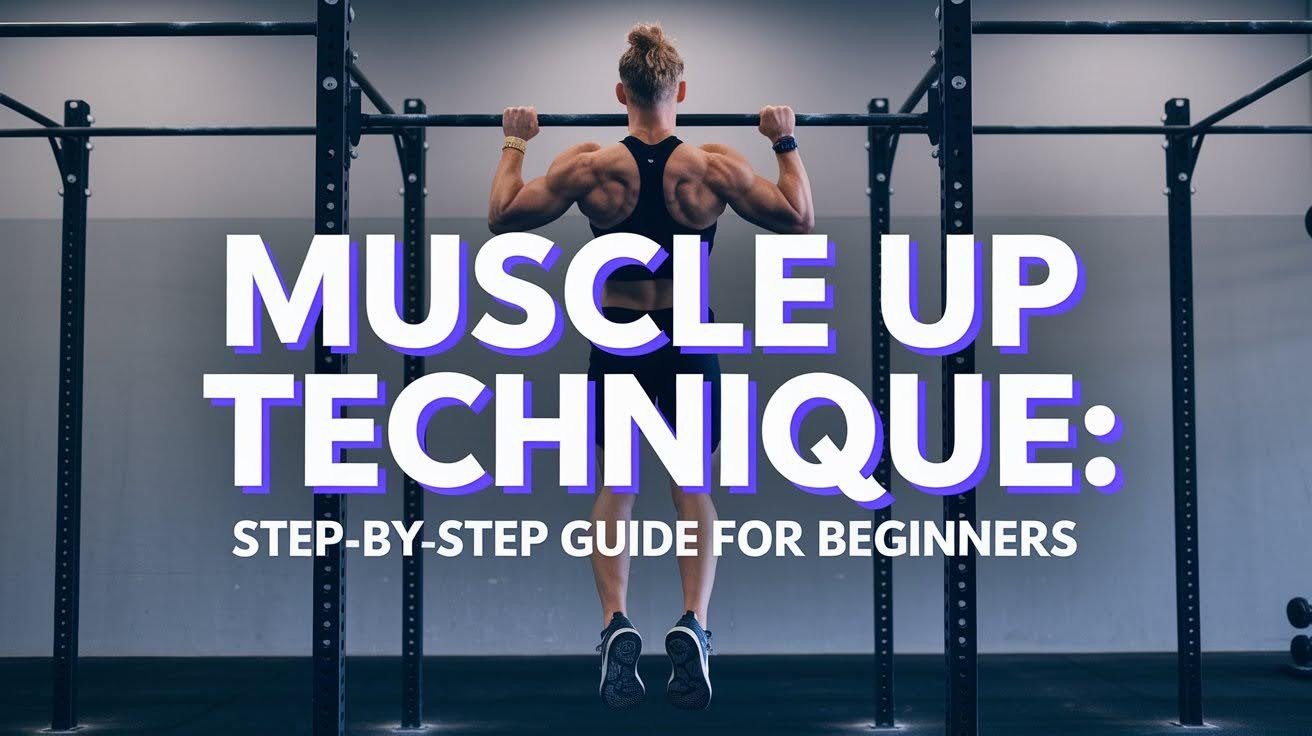
I remember the first time I saw someone do a muscle-up and thought, “I need to learn that”.
The muscle-up is like a pull-up plus a dip in one motion, so you gain much upper body strength, plus your muscles learn teamwork like never before.
Getting the technique right is important, since not doing so can cause injury and slow progress. This guide has step-by-step instructions.
With it, you will learn the ropes safely and responsibly.
I have experience if you are a beginner or if you desire form correction, and I understand effective methods. Let’s get you pulling yourself over that bar.
What Is a Muscle Up?

A muscle up gets you from hanging below a bar to supporting yourself above it. You pull up, then push down to finish with your arms straight. It’s one smooth movement that needs both pulling and pushing strength.
In calisthenics, your first muscle-up is a big milestone. It proves you’ve built real strength and body control.
This move works your back, chest, shoulders, arms, and core together. It enhances coordination and strengthens you for other exercises as well.
Understanding the Muscle Up Technique

The muscle-up has two main phases. First comes the pull, where you bring your chest to the bar. Then the push, where you press your body up until your arms are straight.
The tricky part is the transition. This is where you shift from pulling to pushing. Most people struggle here because it requires explosive power and good timing.
There are three main types. A strict muscle-up uses pure strength with no swing. An explosive muscle-up adds speed and power. A kipping muscle-up uses leg momentum to make it easier.
Prerequisites Before You Start

Before you attempt a muscle-up, you need a solid foundation. Aim for at least 10 clean pull-ups and 15 dips. Your core should be strong enough to keep your body stable.
Form and shoulder mobility are crucial. Tight shoulders limit your range of motion and make the transition harder. Spend time on shoulder stretches and mobility drills.
Common mistakes can set you back. Don’t rush into the full movement without building strength first. Avoid using too much swing, as it creates bad habits. Don’t neglect your grip strength either.
Take your time with the basics. They make everything easier later.
Step-by-Step Muscle Up Technique Tutorial
Breaking down the muscle up into three manageable phases helps you master each part before putting it all together.
Step 1 – The Pull Phase

Start with an explosive pull that brings your body high. Your goal is to get your chest, then your navel, close to the bar. The higher you pull, the easier the transition becomes.
Stay close to the bar throughout the pull. Leaning back makes everything harder.
Build your pulling strength with these exercises. Regular pull-ups create your base. Chest-to-bar pull-ups teach you to pull higher. Band-assisted high pull-ups let you practice the explosive movement with less body weight.
Step 2 – The Transition

The transition is where you shift from pulling to pushing. Your body needs to roll over the bar as your elbows rotate forward.
Keep your hips close to the bar and lean your chest forward. Your elbows need to move from pointing back to pointing down.
A common mistake is getting one arm over at a time. This throws off your balance. Both arms should transition together.
Practice with an over-grip or half false grip. This hand position makes it easier to rotate your wrists and get over the bar.
Step 3 – The Push Phase

Once you’re above the bar, press down until your arms are fully straight. Control matters more than speed here.
Keep your elbows tucked in and your shoulders stable. Flaring your elbows puts stress on your joints.
Build pushing strength with these progressions. Straight bar dips mimic the exact movement. Ring dips add instability and build more control. Bulgarian dips let you practice with less body weight.
Technique Boosters and Support Drills

These drills help you build the specific skills needed for a clean muscle-up.
The Over Grip
The over grip is a hand position where your wrists roll slightly over the bar. Your palms sit more on top instead of behind it.
This grip makes the transition smoother. It lets your wrists rotate easily as you move from pull to push.
Start using it during regular pull-ups. Practice a few sets to build comfort. Your forearms might feel tired at first, but they’ll adapt.
The Bar Kip
Kipping uses leg momentum to generate extra power. Your body swings in a controlled arc that helps propel you upward.
Follow this progression. Start with knee raises to learn the basic swing. Move to toes-to-bar for a fuller range. Then practice hip-to-bar contact. Finally, work on the full bar kip motion.
Once your kip feels solid, combine it with a strong pull. The momentum plus your pulling strength often equals your first muscle-up.
Final Tips for Perfecting Your Muscle Up Technique
- Be patient with your progress: Don’t rush through reps with sloppy form. One clean muscle up beats ten messy ones. Focus on doing each phase correctly before adding speed.
- Film yourself from the side: You’ll spot issues you can’t feel during the movement. Check if you’re staying close to the bar and watch how your elbows move during the transition.
- Balance your training: Work on strength days with pull-ups and dips. Add skill days for transition drills. Don’t skip mobility work for your shoulders and wrists.
- Stay consistent with practice: Technique doesn’t click overnight. Some weeks you’ll feel strong, other weeks you’ll struggle. Keep showing up, and the movement will come together.
Conclusion
A muscle-up has three distinct parts. They are the pull-up, transition, and lockout. Each part of the movement leads into the next.
As I’ve learned in my training, it’s progress that matters. The first muscle-up won’t look as pretty as an athlete’s. That’s completely fine, too. All that matters is showing up and working on your technique.
Keep practicing these drills and film yourself. Little tweaks here and there. Some days are going to be harder than others.
Toss yourself up and over that bar with confidence before you know it. You got this! Retry
Frequently Asked Questions
How long does it take to learn a muscle-up?
Most beginners need 3 to 6 months of consistent training to get their first muscle-up. The timeline depends on your current strength level and how often you practice.
Can I do muscle-ups if I can’t do many pull-ups?
You should build a foundation first. Aim for at least 10 clean pull-ups and 15 dips before attempting muscle-ups to avoid injury.
What’s the hardest part of a muscle-up?
The transition phase is the toughest for most people. This is where you shift from pulling to pushing, and it requires explosive power and proper timing.
Should I start with strict or kipping muscle-ups?
Kipping muscle-ups are easier to learn first because they use momentum. However, working toward strict muscle-ups builds better overall strength and control.
Why do my elbows hurt when doing muscle-ups?
Elbow pain usually comes from poor form or insufficient strength. Make sure you’re keeping your elbows tucked and not flaring them out during the movement.